Monday, December 2, 2013

Feeling the chill?

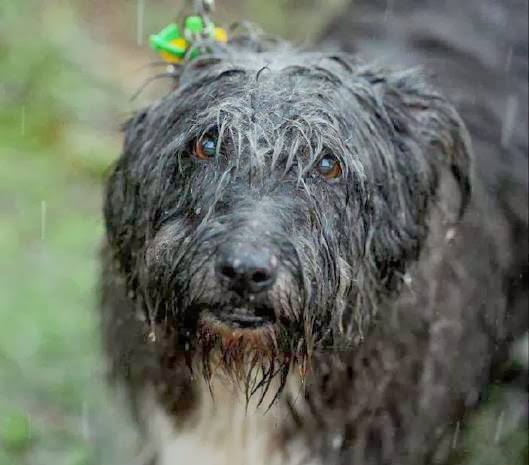
It's November and the recent cold snap is a heads up for what may be a colder than usual winter on the horizon. Whatever the months ahead, it's a reminder to protect your animal family members from the elements.

When the weather turns foul, here are the basics for keeping them comfortable and out of harm's way:

First of all, your cat, dog or other companion animal is just that—family members—and they suffer just as much as the rest of your family do from cold, wet and isolation. They are happiest spending time with you indoors, sharing the benefits and warmth of being part of the family circle.

Cold, forgotten and alone
There is nothing sadder than a lonely and cold "pet" who can only bark or scratch at the door trying to draw your attention to their plight if left in the backyard or unheated garage during freezing or rainy weather. In fact, if you think their lives must be an outside-only existence, don't even consider getting an animal.

If you are away at work and they need access to the outdoors, you should provide either a doggie door or a comfortable dry, draft-free shelter suitable to their size and species until your return.

Special needs
Senior and very young animals need special consideration in inclement weather. This is doubly important with oldies with creaky joints—who suffer when temperatures drop—and with short-coated critters. You might even consider a comfy sweater if they will tolerate it.

Our canine companions and other domesticated animals through their long association with humans no longer have the natural protections Mother Nature has provided for their wild cousins. Even with their furry coats, most no longer have the ability to tolerate severe weather and exposure. Soaking and chilling results not only in misery but presents risks to health and life.

Outside regulars
Free-roaming cats and some wild critters face other dangers when the weather turns foul and they seek sanctuary and warmth in what may seem unlikely places. One of those places may be the still warm engine of your car or even the tire well, and it can be disastrous to them and your car. Take a moment to bang on the hood or take a moment to look under it and scare them off, giving them a chance to leave before starting up the engine. Everyone benefits from this one.

Neglect
What can you do if you see an animal without protection from the elements? First of all, don't be reluctant to speak out - it can save an animal from suffering and even death. Animal Services agencies see a marked increase in citizen complaints when weather conditions turn severe, most complaints deal with lack of water, food and adequate shelter from the cold and wet. While laws governing what falls within the acceptable definition of "adequate shelter" vary and are often too loosely interpreted, it's always best to contact your local animal services/control and ask for a well-check. Often it's a matter of educating people that animals left outside are at risk of hypothermia, illness and even death. It doesn't hurt when regulatory agencies mention the risk of criminal charges for non-compliance. Remember to request a follow up report.

For more detailed information on protections for your animal family and wildlife during cold and wet weather, connect with the following Internet websites:

Protect Your Pet During Winter and Cold Weather

How to Care for Outdoor Cats in Winter

Fall into Winter: Help Backyard Wildlife Prepare for Cold Weather


Tri-City Voice article by Nancy Lyon, President, Ohlone Humane Society

Saturday, October 19, 2013

The night of the Black Cat

In a short while, our homes will be besieged with goblins and ghosties, long-legged beasties and things that go bump in the night—but not to worry, it's just Halloween. A fun time for the kids and those of us who only pretend to be grown up.

However, All-Hallows-Eve does have a dark history. Long ago, this night celebrated festivities that were not so innocent. Dressing in costumes, lighting bonfires, going to parties, sharing ghost stories, and trick-or-treating all originated with the Celtic Druid Feast of Samhain. It was believed at the time that ancestral spirits might emerge and roam freely because walls between the living and the dead were at their thinnest. To nourish journeying ancestral souls, this pagan belief often involved ritual sacrifice of innocent animals.

These early pagan practices have long-lasting beliefs that persist even to this day with cruel and ignorant people placing animals in harm's way during their celebration of All-Hallows-Eve. As unlikely as it may seem, it's wise to err on the side of caution and keep members of your animal family—especially those with black fur—indoors for a few days on either side of Halloween when you are not with them.

That prospect is disturbing enough but there are other potential dangers your animal family faces on this night of celebration and you might want to consider them.

The frightening creatures at your doorstep are, for the most part, just candy-seeking pranksters having a good time. But this can mean little to the family dog who may see them as terrorizing invaders where her only choice is to stand and protect with perhaps serious results...or bolt and head down the road as fast as possible to face real danger.

For the safety of your non-human family members, keep them safely indoors away from direct contact with trick-or-treaters and other Halloween activities. Make sure all are wearing a well-fitting flat collar (not a choke chain) and tags with current contact information; if possible, they should be micro-chipped. Opening the door repeatedly for trick-or-treaters creates plenty of escape opportunities and a frightened animal's first response is usually flight. Proper identification can get them home faster and safely.

Having a sweet tooth is not exclusively a human weakness and the results of gobbling down chocolate, raisins and candy left temptingly within reach can be a very sick critter and a very big mess for you. Chocolate can be so toxic to dogs, cats, ferrets and birds that it might result in death. Hiding all candy is the safest choice but never underestimate the athletic prowess of a determined sweet-seeker so make doubly sure treats are securely out of reach.

This year has truly been the year of the black cat; for some reason, nature has seen fit to produce an unusually large number of black kittens. These beautiful and wonderful creatures need our protection not only from human abuse but in loving homes forever homes. Keep your resident black cat safe during Halloween and please consider adopting one of these fascinating felines from your local animal shelter.

Should your animal companion disappear on Halloween or anytime, contact your local animal shelter as soon as possible and ask for advice in finding your lost family member. Don't wait hoping they will "show up" as it could cost them their lives.

It might be unpopular advice but taking your dog, cat or other animal along when you go trick-or-treating is a really bad idea. For everyone's well-being, leave your companion animal home in a stress-free environment. Especially on a mystical night like Halloween, there is no way of predicting unexpected or terrifying incidents that can send even the most stable animal over the edge to react in an unpredictable manner. A painful bite or lost pet is a poor end to celebrations.

The Humane Society of the United States correctly states that "The only costume most pets want to wear is their own furry birthday suit." It may look like fun to you but unless they are used to wearing clothing, a costume or mask increases their risk of injury and stress. The feeling of confinement and restricted movement is unnatural to most animals and just being who they are is the best costume around.

And then there are the regular night dwellers out on Halloween—for raccoons, opossums, skunks and many other wild creatures, it is time to wake up and venture out for food. The night is their time and they should be respected and left in peace. The best advice is to keep a safe distance between you and any animal you do not know, including cats and dogs.


Tri-City Voice article by Nancy Lyon, President, Ohlone Humane Society

Thursday, May 23, 2013

Of bobcats, births and whistleblowers

Things have heated up early in the California state legislature. Animal and environmental protection bills addressing issues from cattle rustling to fracking are being hashed out in committee hearings as they progress through the lawmaking process.

One of the most heated bills is the "Bobcat Protection Act of 2013," authored by Assembly Member Richard Bloom. It addresses the growing concern over the increasing demand and price for bobcat fur, especially in foreign markets, and its impact on the bobcat population in California.

Supporters—animal and environmental protectionists—of Assembly Bill (AB) 1213 argue that the killing of California’s bobcats for their fur is simply an unacceptable matter of greed looking to profit from a burgeoning market for fur coats in Asia, Russia and Europe. Reportedly, a bobcat pelt is worth $300-$700 on the current market. About 1,800 California bobcats were legally killed by hunters and trappers during the last licensing year—about 1,500 of them by trappers.

Bobcats are a vital part in our eco-system; they help keep the balance of nature by devouring all kinds of rodents as part of their daily diet. A decrease in bobcat numbers could well result in a threat to public health in a time when there is increased concern over rodents carrying the deadly Hanta virus.

Assembly Bill 1213 was originally designed to be statewide but during committee debates, the bill’s reach was amended to the prohibition of trapping, exporting and selling of bobcat fur or product in the area surrounding Joshua National Park.

If AB 1213 is passed, it would direct California Department of Fish and Wildlife to complete a study of the number of bobcats in the state and develop estimates of how many bobcats can be trapped and killed while maintaining a viable population. If the state fails to complete and enact a management program for bobcats by July 1, 2015, the result would support its original mission of a statewide ban on the trapping of bobcats.

----------

The animal nursery exhibit—aka live birthing exhibit—continues to be a subject of heated controversy at the California State Fair that runs from July 12-28 in Sacramento. Since the beginning of the exhibit several years ago, animal welfare advocates have come together to urge banning the practice that imprisons pregnant sows in steel-barred "farrowing crates" for three straight weeks, unable to turn around, barely able to move, and forced to give birth on a barren metal grid, further stressed by nightly fireworks and before milling crowds.

Under normal conditions, expectant pigs look for a quiet, secluded place to birth their young. The contrast between the fair exhibit and natural instincts is glaring condemnation of the practice.


Humane housing for a sow and her piglets (Photo: The PIGSAFE Project)
Compare this to the display at last’s year’s Alameda County Fair that featured a 10' x 20' enclosure, the sow in deep sawdust, with her piglets (born off-site) free to come and go at will through a slotted partition across one corner of the pen, drawn by the warmth of a heat lamp, with pigs and public seemly content.

In fact, it’s interesting to note that according to the Animal Legal Defense Fund, farrowing crates have been illegal since 1970 under California Penal Code 597t.

Many individuals and organizations—including OHS—have requested that this cruel exhibit be dropped, and when the State Fair Board meets for its yearly meeting on May 31, perhaps they will listen.

CALIFORNIA FAIR BOARD
Administration Building
1600 Exposition Blvd
Sacramento, CA 95815
www.calexpo.ca.gov
916/263-3276

----------

One of the most chilling pieces of California legislation that was dropped by its author but may resurface next year was AB 343 by Assembly Member Jim Patterson, a so-called "Ag Gag" bill. AB 343 was meant to punish people who document cruelty to animals by requiring that documenting materials must be given to law enforcement within 120 hours or face a fine.

According to the Humane Society of the United States, Ag Gag bills make it a crime to report animal cruelty inside a poultry warehouse, slaughterhouse, or on a cattle feedlot. They represent a wave of bills passed in state legislatures across the nation that have been put forth by the meat industry to criminalize the reporting of animal cruelty by anyone--journalists, activists, or whistleblowers. Their intent is to prohibit the release of videotapes or photographs that document what happens inside factory farms and meat processing facilities, often with the threat of jail time. The real goal of these laws is to intimidate and discourage a person’s resolve to make public any illegal behavior such as beating or torturing captive animals, often using the police to seize their materials.

The huge agri-business industry is pushing hard to keep Americans in the dark about the extreme cruelty that regularly occurs in food production. Whistleblowers on factory farms and in slaughter houses are being criminalized for exposing animal abuse, unsafe working conditions, and environmental problems on industrial farms.

Instead of upholding existing anti-cruelty laws and working to prevent these abuses from occurring, the agribusiness industry has been working to prevent people from finding out about such problems by promoting anti-whistleblower bills by making it illegal.

Check with HSUS on updates on preventing Ag-Gag bills: https://secure.humanesociety.org/site/Advocacy?cmd=display&page=UserAction&id=6047&s_src=webis


Tri-City Voice article by Nancy Lyon, President, Ohlone Humane Society

Tuesday, April 30, 2013

A throw-away puppy’s miracle

On March 26, OHS received an urgent call from the Tri-City Animal Shelter. A 5-week-old Chihuahua mix puppy, abandoned in a mall parking lot, had been brought in that was too young to be kept at the shelter. She was in a temporary foster home but only for two more days.

The tiny pup, named Lena, had been examined by a vet and found to be a very special needs baby. Lena had been born with birth defects: one eye was missing and the other only semi-functional plus her skull had not yet completely closed so there was the possibility of neurological damage.

The options were to immediately find the best resource for her needs or put her down. Our first thought was the wonderful BrightHaven Sanctuary in Sebastopol and we reached out to Susan Hoffman, their rescue coordinator. OHS has worked with Susan on a number of special cases and she was Lena’s best and only hope.

We gathered up Lena from the shelter and took her to ACE veterinary hospital in Fremont for additional care. They were to board her for a week or more and OHS would pay all her costs.

This was the first real opportunity we had to get to know Lena...all 1.1 pounds of her. Thankfully, aside from infected ears and an eye that will need care for the rest of her life, her other bodily functions appeared to be working well including her sweet puppy voice. In her darkness, all she wanted was to be held close and comforted, and to give kisses.

Susan posted Lena on the BrightHaven message board and the calls started coming in. This throw-away puppy touched many hearts. Susan carefully screened offers of help and we discussed what would be the best option for Lena to heal and thrive. We agreed the amazing Mia Foundation in Las Vegas that deals exclusively with animals with birth defects was her best chance. Lou Hendon, founder of The Mia Foundation, didn’t hesitate a second and said, "Bring her to us."

Transportation was the next item on the agenda. An attorney on the BrightHaven message board volunteered to use her frequent flyer miles and bring Lena to The Mia Foundation. She was delivered to the attorney in San Francisco and that evening, a tired puppy departed SFO travelling in First Class—sleeping on the attorney's lap the entire flight! Lena arrived in Las Vegas to the welcoming arms of The Mia Foundation...and a new life and name: Meme.

Meme’s foster mom Kim is just crazy about her adorable little charge. She also has a special needs kitty who was born without the upper bones in his front legs; he walks on his elbows (hence, his name "El Bo"). Bo is scared of pretty much everything and everyone and likes to keep to himself. Kim reports that not only did Meme charm him in less than 5 minutes, he was actually PLAYING with her. Our feisty miracle girl is indeed a charmer, described as a happy little monkey SO full of life and the will to live!

Is one little creature with so much working against her worth all the effort? You bet she is!

Special thanks to:
BrightHaven: Center for Animal Rescue and Holistic Education - www.BrightHaven.org
The Mia Foundation - www.TheMiaFoundation.com
Kim, Meme's foster mom, and Bo

Tri-City Voice article by Nancy Lyon, President, Ohlone Humane Society

Friday, March 8, 2013

Love is in the Air

The beginning of spring brings baby birds and mammals; it also brings injured and orphaned wildlife. Many caring Tri-City citizens like you have aided in the rescue, rehabilitation and release of these less fortunate wild animals who, because they were found in time, recover in our care at the Ohlone Humane Society Wildlife Rehabilitation Center. But what about the wildlife that we don't find that are in need of assistance during the breeding season? Can we come together as a community and offer them assistance?

Over the past 40 years, Tri-Cities' wildlife has learned to adapt living habits in an ever-growing urban/suburban environment. With loss of habitat comes a loss of wildlife. But even with a loss of habitat, our wildlife perseveres and survives in an encroaching human environment. They manage to build nests in our planter boxes, attics, decks, trees and sheds. They help themselves to our fruit trees, vegetable gardens and pet food. And when they are thirsty, they use our swimming pools and garden ponds. Our local wildlife behaves this way because they, just like us all, are trying to live out their lives and raise their young.

Wildlife is something that is admired by so many of us. Unfortunately, when they end up in our backyards or homes, there are times when things may start to become a little too close for comfort. When our winged and four legged friends come into our yards and homes, it means they are looking for the same things we need, the essentials of survival. We all, wildlife included, need food, water and shelter to survive. Displaced mammals and birds who have taken up residence in your attic or crawlspace are looking for places to raise their young. If that is the case, wildlife and their young should be handled by a wildlife humane exclusion professional.

Wildlife loves a free and easy meal. Cat or dog food is one of their favorite foods. When left outside, you are attracting wildlife particularly during the nighttime hours. Help our wildlife stick to their own natural diets. Discourage them and their young from getting a free meal. Feed your domestic animals in the house, garage or other area to which they can have access; yet you can close your companion animal's doggy door from those uninvited visitors at night.

Realize also that heat and drought are hazardous to our local wildlife. There are a few simple things that you can do at home to help wildlife in times of need and stress. Set up a birdbath or fountain in your garden and faithfully refill it no less than every three days during the hot weather months. A more simple approach is to set up a shallow dish of water under a shady tree. This will help keep them out of swimming pools and garden ponds. Every positive action we make together, as a community, will benefit every living creature on our beautiful planet we all call home.

Got Donations? We Are Not Even Asking For Cash!
We are in need of the following items to keep our wildlife center running for the community: bleach, copier paper, fruit, gift certificates for pet stores and grocery stores, Kleenex, latex gloves, laundry soap, paper towels, prepaid gas cards, dry and wet cat and dog food, toilet tissue, bottled water and VOLUNTEERS.

 
Volunteer Opportunities
Volunteer orientation classes begin in March and run every month through June. New volunteers begin their service after they complete the new volunteer orientation class. For more information, email ohswildlife@yahoo.com

New volunteers will be trained to:
 - Feed our injured and orphaned wildlife
 - Clean wildlife habitats
 - Prepare meals for our patients
 - Do laundry, dishes and gardening


Requirements to Volunteer:
 - Complete the OHS application process
 - Be at least 16 years of age or older
 - Attend and complete the New Volunteer Orientation class
 - Complete on-site training
 - Commit to a regularly scheduled weekly shift
 - Have a positive attitude and a love for all wildlife
 - And not be afraid to get dirty!

If you ever find an injured or orphaned wild animal, do not feed it. All wildlife has special diets. Before you bring it to the wildlife center, place the animal in a box with a paper towel on the bottom and secure the lid. Put the box in a quiet, stress-free area away from noise, pets and children. Do not send an email to report an injured or orphaned wild animal; call (510) 797-9449.

For more information on how to live in harmony with local wildlife or volunteer opportunities, email us at ohswildlife@yahoo.com.


Tri-City Voice article by Angela Hartman, Volunteer Coordinator and Wildlife Care Supervisor, Ohlone Humane Society Wildlife Rehabilitation Center

Wednesday, November 28, 2012

Political Animals

As the election dust settles, campaign ads have mercifully disappeared and the 2012 state legislative session adjourns until January. Because of the election there will be many new legislators. Due to term limits, we are losing very good legislators such as San Mateo's Senator Joe Simitian. It's time to look back on the bills that passed or failed. As the Legislative Advisor to OHS and a member of Paw PAC, California's Political Action for Animals, we monitored 50 pieces of legislation affecting animals. Among those that were supported and passed:

Assembly Bill (AB) 2402 authored by Assemblyman Jared Huffman (who is going to Congress) changes the name of the California Department of Fish and Game to Department of Fish and Wildlife. It establishes an independent scientific advisory panel, authorized partnerships with non-profit organizations, and creates an "environmental crime task force." This new law will reflect the broad responsibilities the Department has to all wildlife and their habitats, not just "game." Next year Governor Jerry Brown has an opportunity to appoint at least two Fish and Game Commissioners who oversee the Department. The Commission has always been dominated by hunters. It's time for more environmentalists.

Senate Bill (SB) 1145 authored by Senator Bill Emmerson raises the maximum fines for animal fighting from $5,000 to $10,000 and from $1,000 to $5,000 for spectators. Dog fighting and cock fighting are among the cruelest abuse of animals for entertainment and gambling. The penalties have to be high to be meaningful and encourage enforcement.

SB 1221 authored by Senator Ted Lieu bans the hunting of bears and bobcats with dogs with the exception of pursuing them under a depredation permit or for research purposes. SB 1221 was the most controversial and contested bill in the Capitol Building, filling the halls and hearing rooms with hundreds of hunters and animal advocates. Hound hunting, as it's called, entails dogs pursuing bears or bobcats sometimes for hours until the bear or bobcat is too exhausted to continue and climbs a tree to escape. The hunter then comes and shoots him/her at close range until the animal falls out of the tree. The majority of the legislators and animal advocates do not consider this "fair chase."

SB 1229 authored by Senator Fran Pavley prohibits landlords from requiring the de-clawing of cats or de-barking of dogs as a condition of rentals. De-clawing is a form of amputation and completely unnecessary as is de-barking. While rentals may be temporary, these procedures are permanent.

SB 1500 authored by Senator Ted Lieu amends and improves law enforcement procedures in dealing with "owners" of seized or abandoned animals to be sure the animals can be cared for properly. It does the animals no good to be returned to abusive or neglectful people.

The California Fish and Game Commission passed amended regulations to improve the inspections of facilities where captive exotic animals are kept, including circuses. This is the result of a successful law suit by animal advocates, I am among them, that maintained the Department was violating existing law by allowing permittees to have their own paid veterinarians conduct inspections, a conflict of interest. The Commission also accepted a petition by wolf defenders asking them to protect a lone wolf, OR7, who wandered into California from Oregon. Fortunately, the Commission will once again consider banning the importation of frogs and turtles for live animal markets and the pet trade. Many are diseased and released in California where they are killing our native wildlife.


While good bills were passed, others failed. Among them:

AB 298 authored by Assemblywoman Julia Brownley (who is going to Congress) would have phased out plastic bags that have a onetime use and require stores to make reusable bags available for sale. Plastic bags are a major source of litter often killing wildlife who mistake them for food.

SB 969 authored by Senator Juan Vargas would have set up a California Pet Grooming Council to certify trained groomers and set standards in housing and handling. It would have been a voluntary certification program. This was the second unsuccessful attempt to protect animals from injuries by untrained groomers and unsafe handling.

SB 1480 authored by Alameda County's Senator Ellen Corbett was vetoed by the Governor and is probably the most disappointing loss to animals this year. It would have established a special license for people who trap wildlife, often called "nuisance wildlife trappers." Under current law the animals must have damaged property, but often they are trapped and killed just because they are considered a nuisance. SB 1480 would have banned cruel killing methods such as drowning, crushing chests, or injecting chemicals and would have required trappers to give information to their customers about current laws. Many people assume or are told that the animals will be released to the wild. But that is against the Fish and Game Code. If you have a wildlife problem, call a wildlife rehabilitation center for suggestions.

SB 1523 authored by Senator Tony Strickland would have provided money from fines and fees to go into the "Retired California Race Horses Fund" for the retirement, rehabilitation, and re-training of race horses. Many race horses end up going to slaughterhouses. These animals have won money for their "owners" and deserve a humane retirement instead of being treated with neglect, abuse, and greed.

Virginia Handley has advocated for animals at the State and local levels for more than 30 years. She is President of Paw PAC founded in 1980, and currently heads up the Animal Switchboard. Copies of the bills, the votes, and legislative analyses are available at www.leginfo.ca.gov. For more information on PawPAC contact Virginia at (510) 222-2236 or info@pawpac.org.


Tri-City Voice article by Virginia Handley, President, Paw PAC (California's Political Action Committee for Animals)

Tuesday, October 23, 2012

Little dog lost...

Saturday, September 29th, was a warm summer afternoon and Brian Maguire and his canine buddies set out on one of their frequent strolls down Sabercat Creek Trail that meanders along an oak-studded waterway not far from Ohlone College in the Mission San Jose District of Fremont.

The trail, a two-mile long bit of remaining wilderness, is a former archeological dig site where once saber-toothed cats, wolves, giant sloths and cave bears roamed and is, to this day, a shelter for local wildlife. It was this fact that brought their idyllic adventure to a sudden and devastating end.

One of Brian’s beloved charges, foster dog Bo—a small, young Chihuahua mix that had been rescued from the Fremont Animal Shelter months before—still had some behavioral issues that Brian worked on in the usually peaceful environment of the trail. On this day, Brian was working on Bo’s recall...something that free-spirited Bo was slowly ‘getting’ if somewhat reluctantly. She had been off-leash for a short space of time and had returned when called after a minor infringement. After praising her for returning, Brian clipped a long leash to her collar and proceeded toward home.

What happened next was unexpected and changed two lives perhaps forever.


Suddenly, a large deer bolted from the wooded area next to the trail and Bo, still pumped from her previous episode, took off in hot pursuit snapping her leash in the process. The leash should have held and the only thing Brian thinks could have happened is when he leashed her, he may have clipped the leash to her ID ring in error. If this happened, then it could mean the ring may have broken and her tags come off later.

Bo, for all her bravado when it comes to other animals, is still shy of strangers. Her life before Brian had not been easy.

It has been more than two weeks and Brian and friends, both two and four-legged, have scoured the trail and adjacent areas for Bo each day. Homes surround the trail area and lost flyers have been posted everywhere, shelters and local veterinarians alerted but with no response that has lead to bringing Bo home. Bo seems to have disappeared from the face of the earth.

A week later, a small lone dog was spotted in the area by a man who had seen one of the posters and tried to get the name off the tags but the dog, who according the report looked exactly like Bo, spooked and ran off. He stated that he later saw the same dog on leash with a man walking the trail - a dog described as looking exactly like Bo. Had Bo been rescued once again?

As it stands, we have a lost little dog in a potentially dangerous environment and a deeply depressed person who loves her so much that he has hardly slept and won’t give up looking for her. As each day passes…missing her more and more…remembering waiting for her to scratch the back door to come in when he returns from errands. Recalling all the little endearing things that we often take for granted until a loved one is no longer with us. Her favorite bed remains empty where she would be tucked under her fleecy blanket every night, poking out her little head to say goodnight.

One of the hardest things when a loved one disappears is not knowing what happened to them…there is no closure. In Bo’s case, she may have finally been caught by a Good Samaritan who didn’t know to report finding her to the animal shelter, or a worse scenario, she is still lost and alone. It’s the not knowing.

Please help us find Bo. She is about 12 pounds, wears a collar with an ID tag and has an embedded ID microchip with tag# 981020005083783.

Bo is very shy with most people so if you spot her, please call Brian ASAP at 510-501-4576 (call 24/7) or email BSMaguire@gmail.com. If you or someone you know has her, Brian needs to know she is safe.


Tri-City article by Nancy Lyon, President, Ohlone Humane Society